 IHHN
IHHN
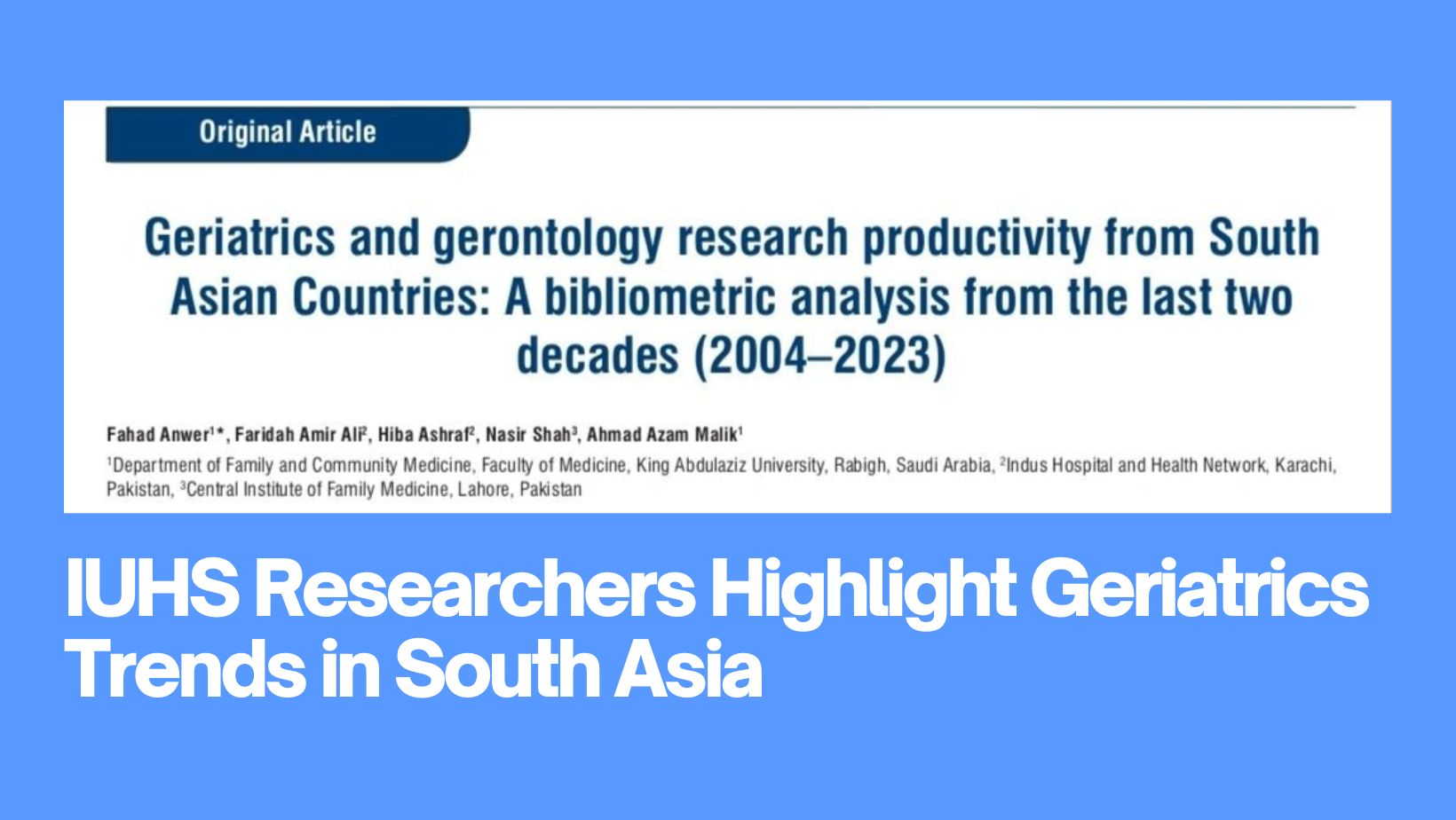
IUHS Researchers Contribute to Regional Insights on Geriatrics Research
A recent publication titled “Geriatrics and Gerontology Research Productivity from South Asian Countries: A Bibliometric Analysis from the Last Two Decades (2004–2023)” has highlighted important trends in aging-related research across South Asia. The study was authored by Dr. Faridah Amir Ali, and Dr. Hiba Ashraf from Indus University of Health Sciences, along with Dr. Nasir Shah, and Dr. Ahmad Azam from collaborating institutions.
Published in Aging Medicine and Healthcare in 2026, the study analyzed research publications indexed in the Web of Science database between 2004 and 2023 to understand patterns in geriatrics and gerontology research in South Asia. Using bibliometric analysis, the researchers examined trends in publications, collaborations, funding sources, and research themes in the region.
The analysis identified 1,042 research articles from South Asian countries, accounting for approximately 0.97% of global research output in geriatrics and gerontology. Among the countries in the region, India emerged as the most productive contributor, followed by Pakistan and Bangladesh. Importantly, the study also revealed a significant rise in research activity during the last decade (2014–2023), with nearly 74% of publications appearing in this period, and a sharp increase in output observed after 2018.
The authors also found that international collaboration plays an important role in advancing geriatric research in South Asia, with partnerships involving institutions in the United States, the United Kingdom, and China contributing to increased visibility and impact of research publications.
Keyword analysis highlighted two major research themes in the region: neuropsychiatric conditions associated with aging—such as dementia, Alzheimer’s disease, and depression—and biological mechanisms of aging, including oxidative stress and cellular processes.
The study concludes that while South Asia’s contribution to global geriatrics research remains modest, research productivity has grown steadily over the past two decades. The authors emphasize the need for greater regional collaboration, increased research funding, and focused research on under-explored areas such as dementia care, geriatric health services, and elderly nutrition to better address the healthcare needs of the region’s rapidly aging population.
This work represents an important step toward understanding research trends in aging within South Asia and highlights opportunities for strengthening research capacity and improving healthcare strategies for older adults in the region.